A letter from a reader Zara
I do not wear prints. This is how I stopped looking plain anyway.
On the corduroy shirt whose ribbing catches the light — so one quiet color does the work a pattern usually has to.


I am 63 and I do not wear prints. Not florals, not stripes, not the geometric things everybody was buying a few years ago. I tried for years and every single one of them ended up at the back of the closet, because a pattern puts the busiest part of a garment somewhere on my body and I could never stop being aware of it.
Which left me in plain colors, and plain colors on a plain shape is how you end up looking like you did not try.
It was my daughter Sarah, up in Boston, who told me to stop settling and look at a shirt from a small family boutique here in South Carolina. Feel the fabric, she said. Before I tell you what it did, I think you should read the Clarke family's letter first.
The Clarke family runs a small boutique here in South Carolina, family-run since 1986 — three generations, mother to daughter. The shirt is called the Zara, and their letter walks through the handful of things they refused to compromise on. I am going to let their words carry it, because they say it better than I could.
1Texture, so the color does not have to be loud

Corduroy is the only plain fabric that is not really plain. The wide cords catch the light along one side and hold shadow on the other, so a single quiet color shifts as you move and never reads as flat. For a woman who has decided against patterns, that is the answer — interest in the cloth itself, and nothing sitting anywhere on you.
2The cords run up and down
Every one of those lines runs vertically, from the shoulder to the hem. It is the same reason a pinstripe has been in tailoring for a century — the eye follows the line, and a line that runs up and down reads longer rather than wider. Nothing about the cut is doing that work. The fabric is.
3Proper pockets, with flaps and buttons

Two patch pockets sit on the chest with a buttoned flap over each, the way a workwear shirt has always been made. They are stitched on rather than cut in, so they hold their shape and give the front some structure instead of hanging flat. It is the detail that separates a shirt that was made from one that was merely printed and cut.
4Cut roomy, and meant to be rolled

The body is cut generously so a fine knit goes underneath without straining, and the sleeve is full enough to turn back into a soft roll below the elbow. Corduroy holds a fold rather than slipping out of it, so it stays where you put it all day. Sleeves down when it is cold, rolled when you are cooking.
5A shirt or a jacket, depending on the day

Buttoned up over a tee it is a shirt. Left open over a knit it is a light jacket — heavy enough to be the only layer on a cool morning and light enough to keep on indoors. That is the gap most closets have: too warm for a shirt, too mild for a coat. The hem is curved and drops a little at the back, so it covers either way.
6Six colors, and a size for you — S to 2XL
The Zara comes in six colors and the one you see me wearing is the dark red, which surprised me — I had gone in expecting to take the gray. Corduroy holds a deep color better than most cloth, so the richer shades are worth a second look. Sizes run S, M, L, XL and 2XL, cut roomy to layer, so take your usual size.
The Zara, against the shirts you've been buying
| The usual plain shirt | The Zara | |
|---|---|---|
| Where the interest is | A print sitting somewhere on you | In the cloth itself, nowhere in particular |
| The surface | Flat, and it reads flat | Wide cords that catch the light |
| The line | Nothing drawing the eye anywhere | Vertical cords from shoulder to hem |
| The pockets | Flat, cut in, barely there | Patch pockets with buttoned flaps |
| What it is | A shirt, and only a shirt | A shirt buttoned, a jacket open |
- A print sitting somewhere on you
- Flat, and it reads flat
- Nothing drawing the eye anywhere
- Flat pockets, barely there
- A shirt, and only a shirt
- Interest in the cloth itself
- Wide cords that catch the light
- Vertical cords from shoulder to hem
- Patch pockets with buttoned flaps
- A shirt buttoned, a jacket open
Why they're clearing it now
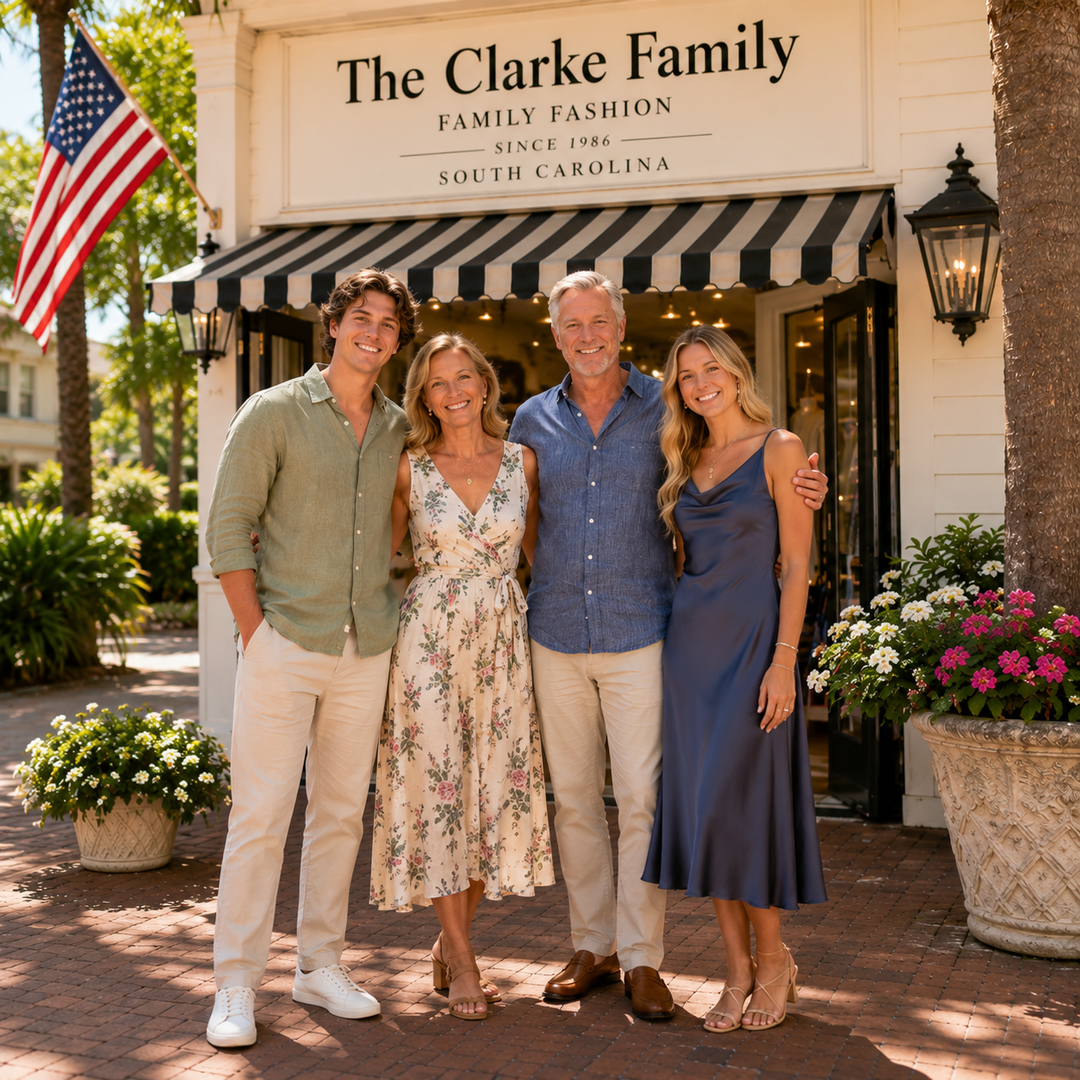
They priced the Zara at $169.95 when it launched, and it sold at that price all season. But for America's 250th, the Clarke family wanted to give something back to the women who have kept their doors open since 1986 — so every shirt is going out at just over a third of that.
Mine arrived a few days later in a box on the bed. I ran my hand down the cords before I lifted it out, which I am fairly sure is what everybody does with corduroy.

The Zara Top
- Wide-wale corduroy — texture instead of a pattern
- Vertical cords running shoulder to hem, so the line reads longer
- Two patch chest pockets with buttoned flaps
- Cut roomy to layer, with sleeves made to roll · curved hem
- 6 colors · sizes S–2XL · Free UPS shipping · 30-day money-back guarantee
The Zara Top · $59.95 while sizes last
Buy 2 get 10%, buy 3 get 15%, buy 4 get an extra 20% off. When it's gone, it's gone.
I do not usually write things like this. But I had decided that not wearing prints meant resigning myself to looking plain, and it turns out the answer was never a pattern — it was a fabric with something going on in it. If you gave up on prints the way I did, I hope you find your size before it clears.
— Margaret Ellison · Mount Pleasant, SC
See the Zara — $59.95 →This is a personal account from a Clarke Family customer. Margaret was not paid to write it. · The Clarke Family · Family Fashion · South Carolina, since 1986 · Free UPS shipping · 30-day money-back guarantee.